Be a Tracking Leader
Wolverine Tracking Project - Winter Tracking Surveys
Tracking Leaders are the keystone of the Wolverine Tracking Project’s Winter Tracking Surveys.
Tracking Leaders share their knowledge and skills with others, and in so doing become part of a community where they can develop their skills even further.
Tracking Leaders share their knowledge and skills with others, and in so doing become part of a community where they can develop their skills even further.
Tracking Leader Role
|
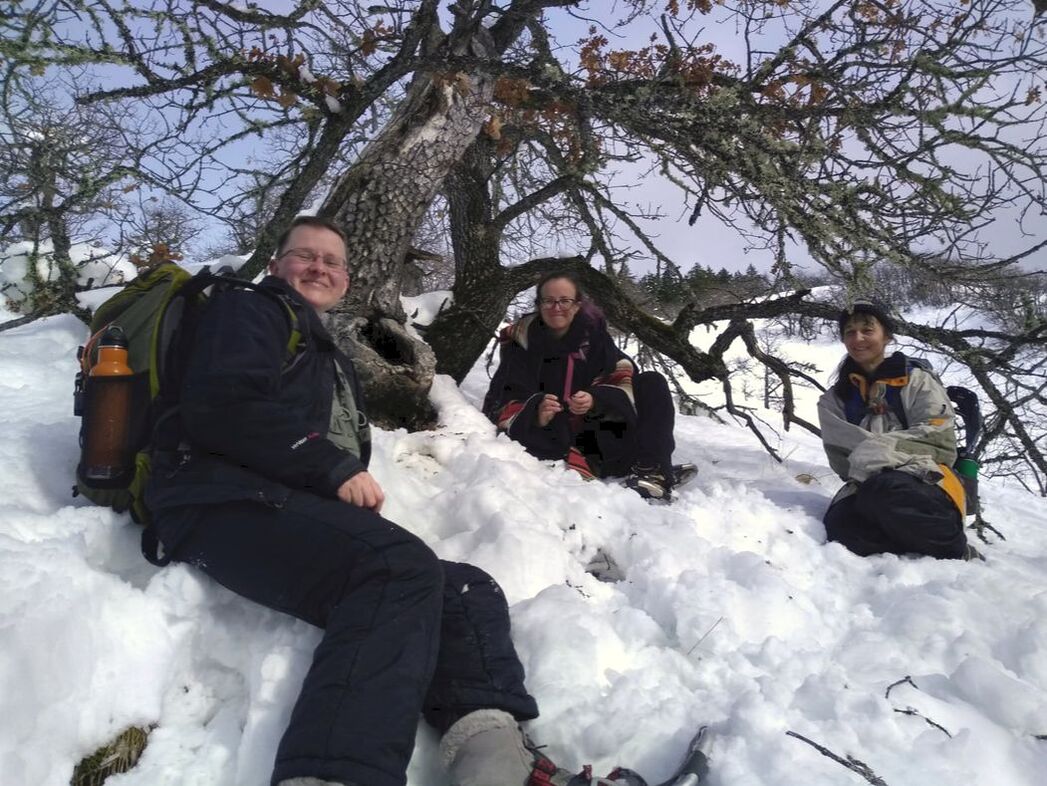
As the backbone of the Wolverine Tracking Project, Tracking Leaders have an important role and many responsibilities. They are responsible for:
|
|
Becoming a tracking Leader
The path to becoming a Tracking Leader is different for everyone.
The journey starts with participating in at least one season of group tracking surveys. Here you will learn about Mt Hood wildlife, our data collection procedures, and, in general, see what it is all about. The most common path to becoming a Tracking Leader is to participate in the Tracking Apprentice program while helping on survey trips. Though this, you will learn the tracking and the leadership skills you need. If you already have these skills, however, you may skip this step.
When both you and the Leadership Team feel confident in your skills, and you meet the qualifications below, you are ready to begin. The next is to take the tracking leader evaluation. This formal evaluation consists of a written and a field component, and provides valuable feedback on the strengths of your tracking and leadership skills and areas for improvement. The evaluation also provides an objective assessment of your tracking ability, which helps to verify that the data collected by our Tracking Leaders is accurate and reliable.
After being promoted to Tracking Leader, we will continue to pair you with an experienced leader who will shadow you and provide assistance if necessary, until you feel confident leading on your own.
We also strongly encourage Tracking Leaders to participate in a CyberTracker Track and Sign Certification to both develop their skills and receive certification.
The journey starts with participating in at least one season of group tracking surveys. Here you will learn about Mt Hood wildlife, our data collection procedures, and, in general, see what it is all about. The most common path to becoming a Tracking Leader is to participate in the Tracking Apprentice program while helping on survey trips. Though this, you will learn the tracking and the leadership skills you need. If you already have these skills, however, you may skip this step.
When both you and the Leadership Team feel confident in your skills, and you meet the qualifications below, you are ready to begin. The next is to take the tracking leader evaluation. This formal evaluation consists of a written and a field component, and provides valuable feedback on the strengths of your tracking and leadership skills and areas for improvement. The evaluation also provides an objective assessment of your tracking ability, which helps to verify that the data collected by our Tracking Leaders is accurate and reliable.
After being promoted to Tracking Leader, we will continue to pair you with an experienced leader who will shadow you and provide assistance if necessary, until you feel confident leading on your own.
We also strongly encourage Tracking Leaders to participate in a CyberTracker Track and Sign Certification to both develop their skills and receive certification.
Benefits
|
Continued mentorship
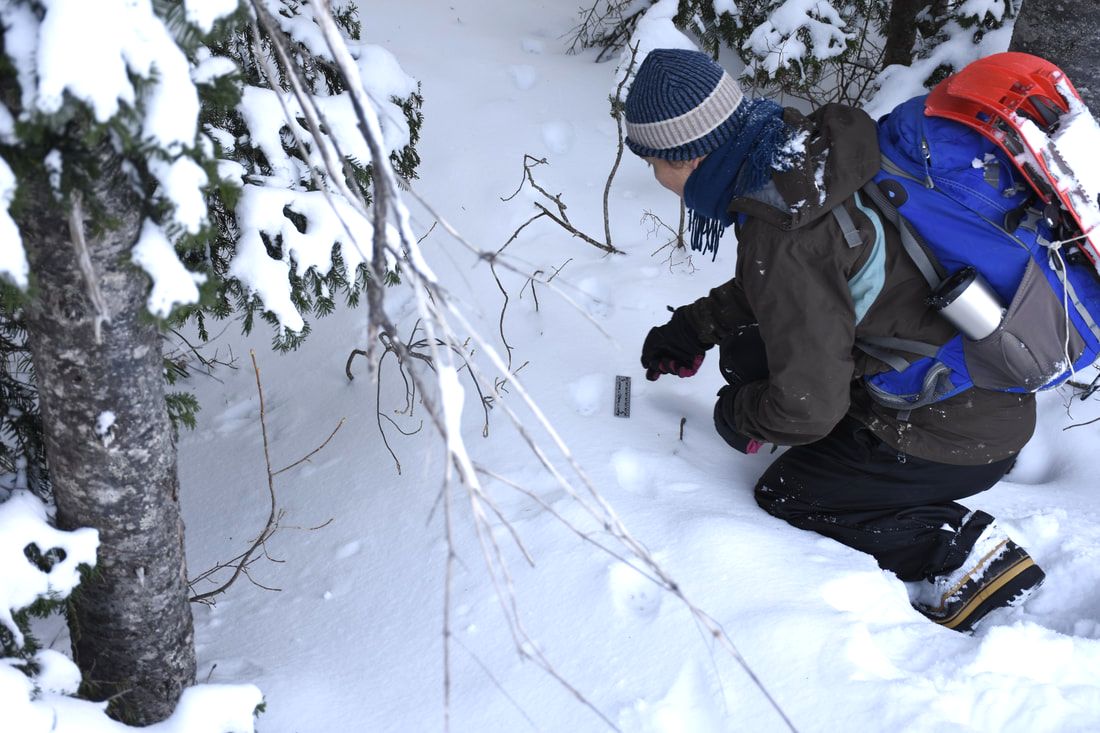
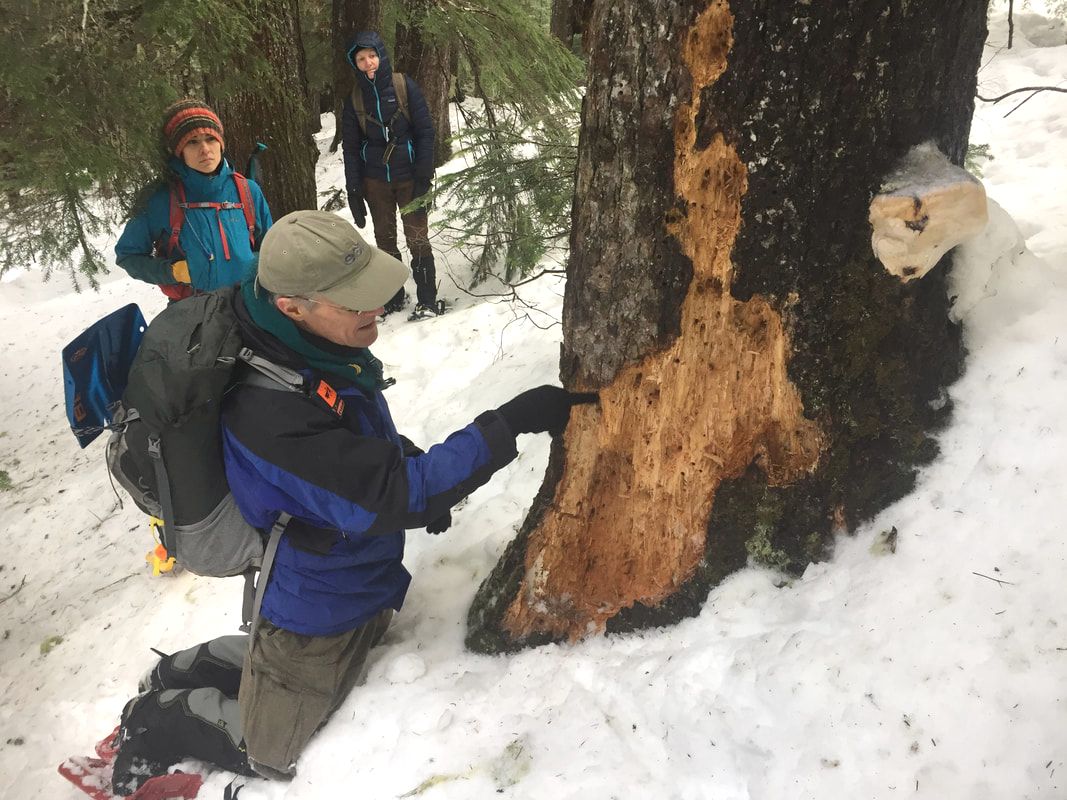
If you became a Tracking Leader through the Tracking Apprenticeship program, the mentorship that you received will continue as you become confident in your new role. For experienced Tracking Leaders, mentorship offers the opportunity to hone your tracking and leadership with another skilled tracker. Being part of a great team Tracking Leaders have a great wealth of knowledge and passion for tracking - and they like to have fun, too! This is a great group of people to learn from, go tracking with, support on a survey team, sharing in and building a community of enthusiastic trackers. |
|
|
Contributing to wildlife research
Tracking Leaders facilitate the collection of data on the wildlife of Mt. Hood National Forest. Researchers and wildlife managers rely on our data, and the expertise of Tracking Leaders, to help inform management decisions. Giving back to the community Tracking Leaders help connect our community to the natural world, providing opportunities for stewardship and involvement in our local forest while increasing others' awareness of the world around them and their place in it. Free classes We encourage Tracking Leaders to actively continue building their skills throughout their leadership. We offer Tracking Leaders select Cascadia Wild classes at no cost. |
Tracking leader Qualifications
|
|
Senior Tracking Leadership
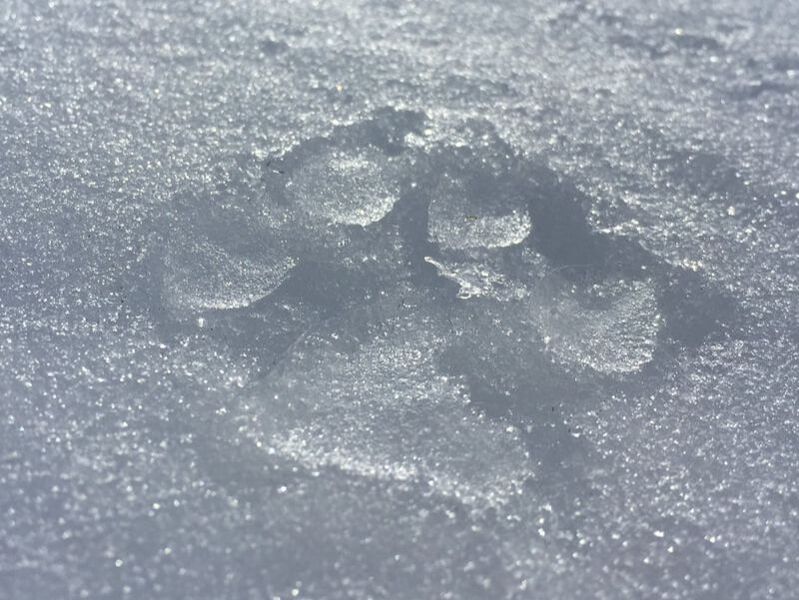
Tracking Leaders who have been leading for at least three seasons, have proven excellent tracking skills, and meet the other qualifications below have the opportunity to become Senior Tracking Leaders. Senior Tracking Leaders help with evaluating new Tracking Leaders and have the opportunity to assist with refining survey protocols and other aspects in the development and improvement of the Winter Tracking Surveys. Senior Tracking Leaders are looked up to and relied upon to provide exceptional mentorship, tracking knowledge, and leadership.
Senior Tracking Leader Qualifications
- Completion of at least three seasons as a Tracking Leader
- CyberTracker Track and Sign Evaluation: Level 3 or higher
- Demonstrated dedication to the Winter Tracking Surveys and the values of Cascadia Wild
- Exemplary in the Tracking Leader role and exceeds all Tracking Leader Qualifications